
AutoFigure:編集可能な科学イラストを生成
Auto Figure は論文のメソッドテキストを完全に編集可能なSVG科学イラストに変換します — 自由に修正できる出版品質の学術図版。
LLM生成、SAM3セグメンテーション、ベクター化を組み合わせ、Auto Figure は高品質な方法論図表を生成し、参照画像からのスタイル転送をサポートし、ブラウザ内SVGエディタを内蔵しています。
AutoFigureを今すぐ試す
Auto Figure の自動論文図表生成を体験してください。メソッドテキストを貼り付け、オプションで参照画像をアップロードしてスタイル転送を行い、AutoFigure が出版品質の編集可能なSVGイラストを生成します。
ヒント:簡潔で構造化されたメソッドテキストがよりクリーンなテンプレートを生成します
ヒント:お好みの論文の図をアップロードして、そのビジュアルスタイルを転送できます
画像は生成されていません
AutoFigure ギャラリー
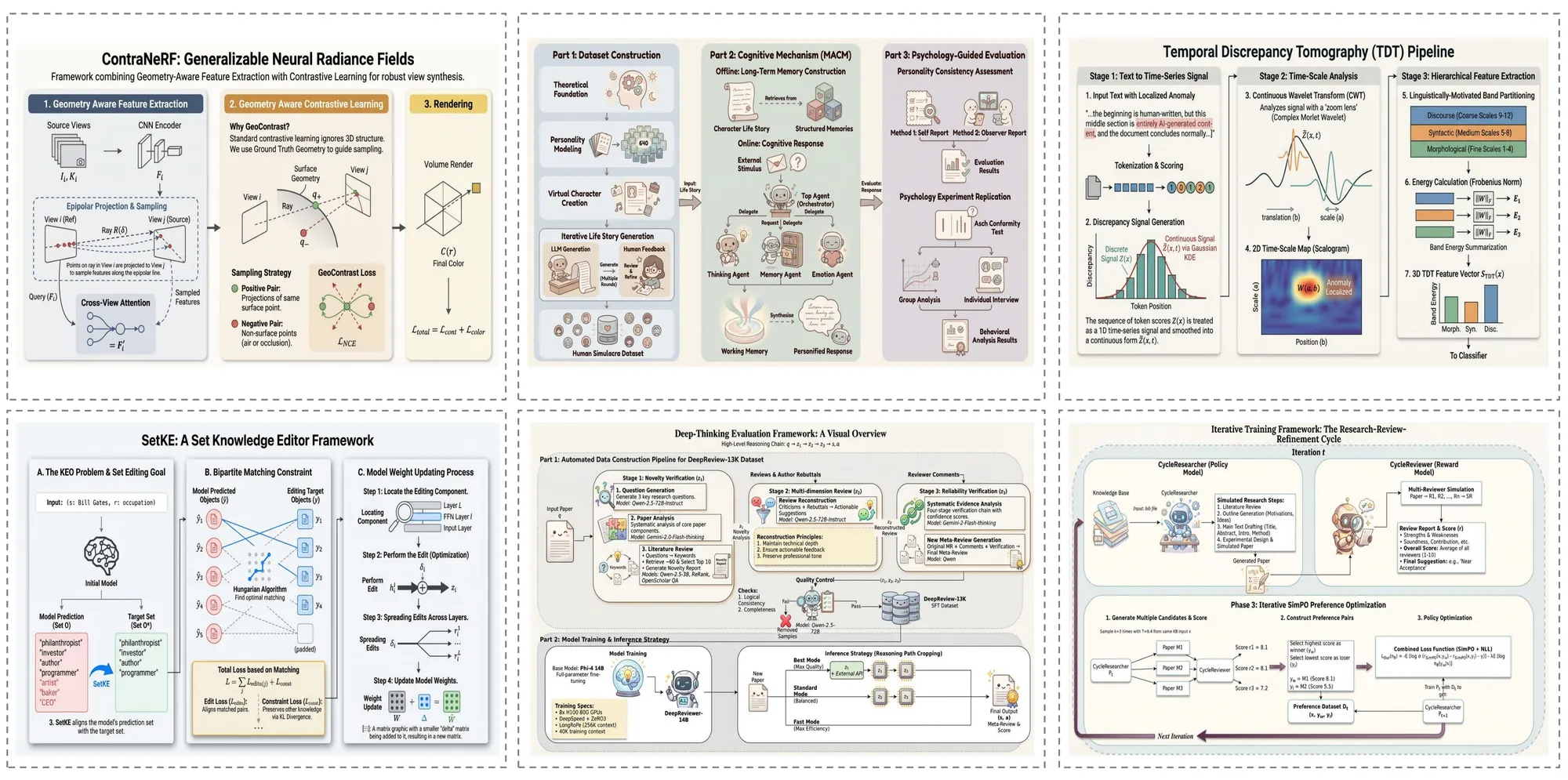
Auto Figure がさまざまな分野で生成した図の例をご紹介します。多様な複雑さの科学イラストに対応する汎用性をご覧ください。
論文ケース
Auto Figure は研究論文のテキストから出版品質の方法論図を直接生成します。複雑なモデルアーキテクチャ、多段階パイプライン、エンコーダ・デコーダフレームワークを、精確な形状、コネクタ、ラベルを持つ完全に編集可能なSVGイラストとしてレンダリングします。
サーベイケース
サーベイ論文では、Auto Figure が複数の手法間の分類体系、関係、比較を捉えた包括的な概観図を作成します。生成された図は、明確な視覚階層と一貫したスタイリングで研究分野の全体像を素早く把握するのに役立ちます。
ブログケース
Auto Figure は非公式な技術文書にも対応します。機械学習の概念を説明するブログ記事から技術チュートリアルまで、複雑なアイデアをより幅広い読者に分かりやすく伝える、明瞭で視覚的に魅力的な図を生成します。
教科書ケース
教育コンテンツでは、Auto Figure が基礎概念を明確に伝える教科書品質のイラストを生成します。ニューラルネットワークアーキテクチャ、データフロー図、生物学的プロセスなど、講義スライド、教材、教科書の章に適した図を生成します。
よくある質問
AutoFigureとその仕組みに関するよくある質問です。
AutoFigure で作成を始める
論文テキストを編集可能なSVG科学イラストに変換しましょう。上のAuto Figure生成器をお試しいただくか、ICLR 2026論文で詳細をご確認ください。
Auto Figure の主要イノベーション
AutoFigure-Edit は ICLR 2026 で発表された、科学イラスト自動生成における画期的な革新を導入しています。
システムアーキテクチャ:5段階パイプライン
Auto Figure は5段階のパイプラインで科学テキストを編集可能なSVGイラストに変換します。
Stage 1: Raster Generation
A vision-language model (Gemini 3.1 Flash) reads your method text and optional reference image, then generates an initial raster draft (figure.png). The LLM understands scientific figure conventions and translates textual methodology into a visual composition.
Stage 2: SAM3 Segmentation
Segment Anything Model 3 (SAM3) detects and segments distinct components — icons, text regions, connectors, shapes — using structured prompts like 'icon, person, robot, animal'. Outputs bounding boxes with confidence scores and a segmentation map (samed.png).
Stage 3: SVG Templating
Using the original figure, segmentation mask, and box metadata as multimodal inputs, the LLM (Gemini 3.1 Pro) generates a placeholder-style SVG whose boxes align with labeled regions. RMBG-2.0 removes backgrounds from cropped icons to create transparent assets.
Stage 4: Final Assembly
The system aligns coordinate systems between the SVG template and original figure, then replaces placeholders with transparent icons extracted from segmentation. This produces the assembled SVG (final.svg) with all components as individually editable vector elements.
Stage 5: Iterative Refinement
An optional optimization stage performs iterative SVG refinement — path optimization, stroke recognition, and layout fine-tuning. Users can also refine the output in Auto Figure's built-in svg-edit canvas with drag-and-drop composition, completing the text-to-editable-SVG workflow.
AutoFigureをシェア